

Daine Nash: Not The Average Beauty Queen
By Amanda Fugel, Wagner College ’16
“This will be a black baby born in Mississippi, and thus where ever he is born he will be in prison … If I go to jail now, it may help hasten that day when my child and all children will be free.”
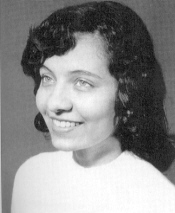
Jailed while pregnant for training Mississippi youth in non-violence, Diane Nash refused the offer to release her. Her actions in Nashville, Birmingham, Alabama and Jackson, Mississippi demonstrated her will to fight against the racist system of the American South that felt like prison for African-Americans. She believed that if she stood up for her cause, she could prevent future generations from facing segregation. A young, well-educated Chicago-born Beauty Queen, Diane Nash acted with bravery and determination to shape the destiny of the Civil Rights Movement and impacted our own lives.
Three Accomplishments
1: She approached Mayor West at City Hall during the Nashville Sit-ins (1960) and asked him whether he felt segregation at lunch counters was moral, and got his to publically announce that he felt it was morally wrong.
“Mayor West, do you think it is wrong to discriminate against a person solely on the basis of their race or color?”
– Diane Nash to Nashville mayor Ben West
“And I found that I had to answer it frankly and honestly – that I did not agree that it was morally right for someone to sell them merchandise and refuse them service. And I had to answer it just exactly like that. Of course I received considerable criticism for it, but if I had to answer it again I would answer it in the same way again because it was a moral question and it was one a man has to answer and not a politician.”
– Ben West, describing his response to Diane Nash
2: She continued the Freedom Rides when people started loosing hope in the cause.
“We can’t let them stop us with violence. If we do, the movement is dead.”
The whole point of the Freedom Rider was to introduce their strategies of non-violence throughout the South in order to directly challenge the region’s Jim Crow laws.
The first Freedom Ride left Washington, D.C., on May 4, 1961, and was scheduled to arrive in New Orleans on May 17.
3: She helped organize the Children’s March in Birmingham with James Bevel in 1963
“The Children’s Crusade was the name bestowed upon a march by hundreds of school students in Birmingham, Alabama, on May 2, May 3, May 4, and May 5, 1963, during the American Civil Rights Movement‘s Birmingham Campaign. Many children left their schools in order to be arrested, set free, and then to get arrested again the next day. The marches were stopped due to the head of police “Bull Connor” who brought fire hoses to ward off the children and set police dogs after the children.”
Leadership Lesson
Grassroots Advocacy is the general promotion of an idea, proposal, or cause through education, and outreach. Diane Nash was always ready to learn, and she loved working with the Direct Action route because she felt it was an efficient way of getting things done. She taught the memebers of SNCC how to go about creating change and she lead the youth and taught them.
Bibliography
Anderson, T. Interview with Diane Nash. (Interview). Iris: A Journal About Women, 22-26. Retrieved from . New York: New York University Press, 2001
Catsam, Derek. Freedom’s Main Line the Journey of Reconciliation and the Freedom Rides. Lexington: University Press of Kentucky, 2009.
Houck, Davis W., and David E. Dixon. Women and the Civil Rights Movement, 1954-1965. Jackson: University Press of Mississippi, 2009. Print.
Robnett, Belinda . How Long? How Long? : African American Women in the Struggle for Civil Rights. Cary, NC, USA : Oxford University Press , 1997.
Thomas, Bettye, and V. P. Franklin. Sisters in the Struggle: African American Women in the Civil Rights-Black Power Movement. New York: New York University Press, 2001.
Wikipedia. “Children’s Crusade.” Wikipedia. http://en.wikipedia.org/wiki/Children’s_Crusade_(civil_rights) (accessed December 2, 2012).